Trading Memecoins as a Beginner
Want articles like this for your own video to promote it on YouTube and Google? Order them through the Telegram bot @sat_sit_bot. Articles with your video embedded are written and posted by the bot itself — on popular topical sites (no ads). Try it free: 50 articles on us.
· based on the channel TJR
Key takeaways
- Memecoins are the highest-risk corner of crypto: most new tokens go to zero, and day trading overall has a negative expected outcome for the majority of participants.
- The standard beginner stack is a self-custody wallet plus a Solana trading terminal such as Axiom, with trackers like Cielo and J7 for wallet and social monitoring.
- TJR's walkthrough routes beginners through Fomo (https://fomo.family/r/tjr) for execution with a 10% fee discount, plus Axiom, Cielo and J7 Tracker as supporting tools.
- Position sizing matters more than token picking: risking 1–2% of a small bankroll per trade keeps a string of losses survivable.
- Red flags to check before buying: unlocked liquidity, a single wallet holding a large share of supply, no social history, and copy-paste websites.
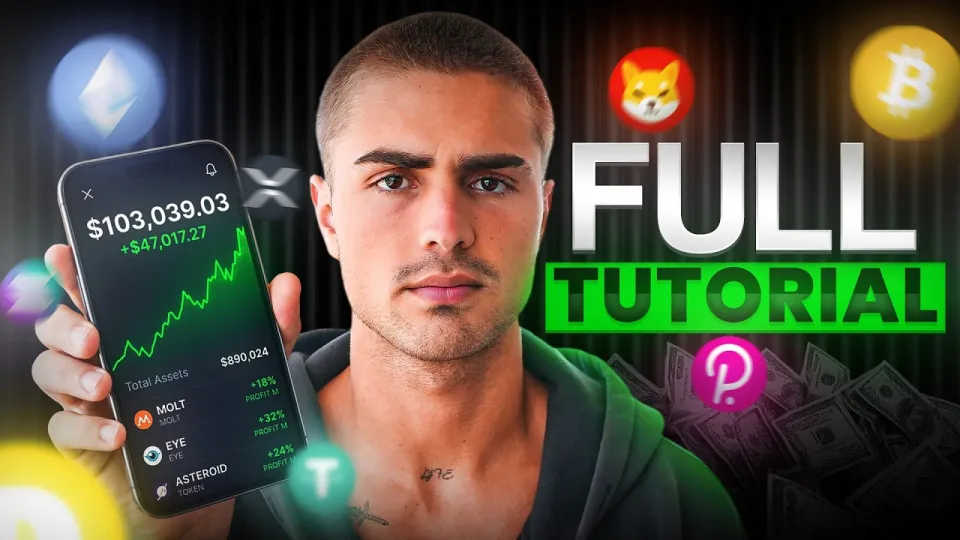
Trading memecoins as a beginner means accepting that you are speculating on attention, not on fundamentals: you buy small, high-risk tokens on Solana or similar chains, size every position so a total loss is survivable, and use a self-custody wallet plus a trading terminal instead of a mainstream exchange. TJR's beginner walkthrough "How To Start Trading Memecoins As A Beginner In 2026" lays out that workflow using Fomo, where viewers get 10% off trading fees, alongside terminals and trackers such as Axiom, Cielo and J7 Tracker.
The honest framing matters more than the tool list. Memecoins have no cash flow, no product and no valuation floor — price is driven entirely by who else is buying. Day trading in general is risky, and most day traders lose money; memecoins compress that risk into hours rather than months.
What trading memecoins actually involves
Memecoin trading is the practice of buying and selling tokens whose value comes from community, memes and momentum rather than revenue or technology. The typical trade lasts minutes to days, not years.
Three things separate it from buying Bitcoin or an index:
- Liquidity is thin. A token with a $200k market cap can move 40% on a single mid-sized sell.
- Supply is controlled by insiders. Developers and early wallets often hold large allocations that can be dumped on new buyers — the "rug pull" everyone jokes about.
- There is no underwriting. You cannot read a balance sheet; you can only read on-chain behaviour and social activity.
That combination is why experienced traders treat memecoins as a small, separate bucket of a portfolio — money they can afford to lose completely — rather than as a savings vehicle.
The beginner setup: wallet, terminal, trackers
A working memecoin setup has three layers: custody, execution and information. Skipping any of them is where most beginners get hurt.
- Wallet (custody). Create a fresh self-custody wallet — Phantom or Backpack on Solana are common choices — and write the seed phrase on paper. Never reuse a wallet that holds long-term assets for memecoin trading.
- Funding. Buy SOL on a regulated exchange, withdraw it to your wallet address, and keep a separate reserve of SOL for gas. You need SOL for every transaction, including failed ones.
- Terminal (execution). This is where the trade actually happens. TJR points viewers to Axiom (https://axiom.trade/@tjrtrader) as a Solana trading terminal, and to Fomo (https://fomo.family/r/tjr) as an execution platform with a 10% fee discount for his audience. Terminals differ mainly in speed, chart quality and how they surface new pairs.
- Trackers (information). Cielo (https://cielo.finance/) tracks wallet activity, and J7 Tracker (https://j7tracker.io/) follows social accounts — useful for seeing whether a token's momentum is real or manufactured.
Set all of this up before you buy anything. Learning a new interface while a position is bleeding is an expensive way to learn.
Position sizing and risk rules that keep you in the game
The single most useful beginner rule is to define your maximum loss per trade before you enter, not after. A practical framework:
- Bankroll: decide on a total amount you are willing to lose entirely. Fund the trading wallet with only that amount.
- Per trade: risk 1–2% of the bankroll on a single memecoin. With a $1,000 bankroll, that is $10–$20 per position.
- Gas buffer: keep 0.05–0.1 SOL untouched so you can always exit.
- Slippage: set a limit — 5–10% on low-liquidity tokens — otherwise you can fill far worse than the quoted price.
- Exit plan: decide the take-profit and stop levels in advance. Memecoins can halve in a minute; there is no time to deliberate.
These rules do not make memecoins safe. They make a losing streak survivable, which is the only precondition for ever being profitable.
How to screen a memecoin before you buy
Screening is a two-minute checklist that filters out the worst tokens. It will not find winners, but it removes the obvious traps.
- Liquidity and lock status. Check the pool size and whether liquidity is locked or burned. Unlocked liquidity can be pulled at any moment.
- Holder distribution. Look at the top holders. If one wallet controls a large share of supply, that wallet sets your exit price.
- Contract checks. Confirm the mint authority is revoked and there is no freeze authority — otherwise the developer can mint unlimited tokens or block your ability to sell.
- Social history. Check whether the project's accounts existed before the token launched. Brand-new accounts plus a brand-new token is a red flag.
- Volume quality. A handful of wallets trading back and forth can fake volume. Compare transaction count against unique wallets.
If any of these checks fails, the correct action is to skip the trade. There is always another token.
Common beginner questions and doubts
One of the most upvoted comments under TJR's video is a beginner describing eight months of studying charts, buying courses and still losing money overall. That experience is common, and it points to a structural issue rather than a personal failing: short-term trading has a negative expected outcome for most retail participants after fees and slippage.
Other recurring themes in the comments are worth addressing directly:
- "Isn't this just an ad?" Educational trading content is often monetised through referral links, including the Fomo, Axiom, Cielo and J7 links above. That does not automatically make the tools bad, but it does mean the presenter earns when you sign up. Treat every recommendation as a starting point for your own research.
- "Do you need to be in private group chats?" Coordinated groups can move small-cap tokens, and being outside them means you are often the exit liquidity. You cannot join every group; you can, however, avoid tokens whose price action looks coordinated and unnatural.
- "Getting rugged during a tutorial." Rug pulls happen to experienced traders too. The defence is position size, not prediction.
- "Is consistent profitability achievable?" For a small minority, yes. For most beginners, the realistic goal in the first year is to lose less, not to replace an income.
Useful links from the breakdown
- Fomo — trading platform with a 10% fee discount for viewers: https://fomo.family/r/tjr
- Axiom — Solana trading terminal: https://axiom.trade/@tjrtrader
- J7 Tracker — social account tracker: https://j7tracker.io/
- Cielo — wallet tracker: https://cielo.finance/
The bottom line on starting out
Trading memecoins as a beginner is a high-variance activity where survival matters more than any single trade, and the setup — wallet, terminal, trackers, position limits — is what determines whether you last long enough to learn. TJR's breakdown is a useful starting map because it names concrete tools and a concrete workflow rather than promising returns. Use it to build a process, keep your first positions tiny, and expect a meaningful share of them to go to zero. If you want to follow the same route, you can start through Fomo with the 10% fee discount and treat everything else as optional infrastructure. The channel TJR is the author of the video this guide is based on.
Questions & answers
How much money do I need to start trading memecoins?
You can technically start with $50–$100, but you also need a small SOL balance for gas on every transaction. The more important number is your maximum acceptable loss: only fund the trading wallet with money you can lose entirely, and risk 1–2% of it per trade.
Why do so many beginners lose money on memecoins?
Thin liquidity, insider-controlled supply and negative expected value after fees and slippage. New tokens can be dumped by large holders at any moment, and beginners often enter after the price has already moved. Position sizing and screening reduce the damage but do not remove the risk.
What tools does TJR recommend in the video?
The description lists Fomo for execution with a 10% fee discount, Axiom as a Solana trading terminal, Cielo for wallet tracking and J7 Tracker for social monitoring. All four are affiliate or referral links, so treat them as options to research rather than endorsements.
Is consistent profitability realistic for a beginner?
For a small minority of disciplined traders, yes, but it usually takes years and significant losses along the way. Most retail day traders lose money, and memecoins amplify that. A realistic first-year goal is to preserve capital and build a repeatable process, not to replace an income.
Source: How To Start Trading Memecoins As A Beginner In 2026 · Markdown version